The Kick-off workshop for the Indo-China Peninsula NSFC Key Project on biomass burning (20150122-23)
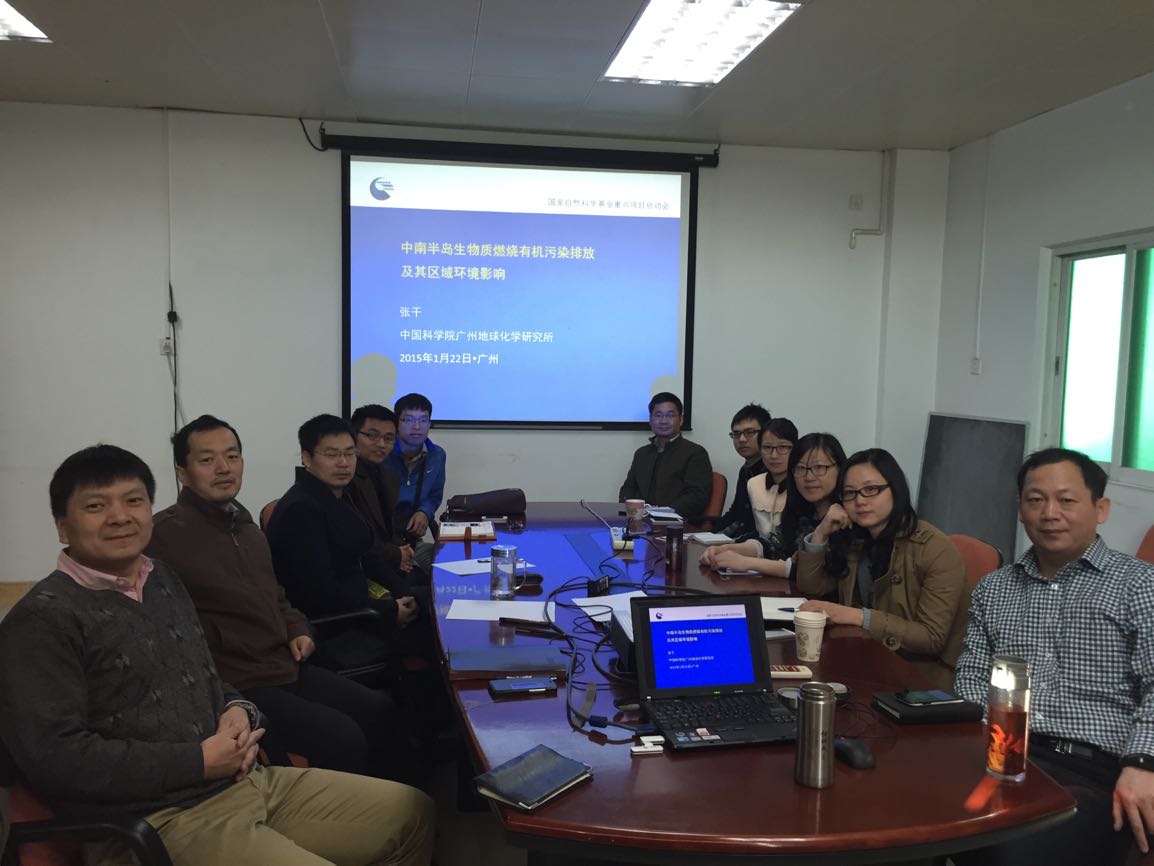
The key project on buomass burning and its environmental impact funded by NSFC was domestically kicked-off on the workshop held in GIGCAS on the 22nd-23rd of January. The project will last for 5 years, with an internaitonal team from Thailand, UK, Swiss and China. The domestic participants include members from Wuhan University, Institute of Geochemistry in Guiyang, Yantai Institute of Coastal Zone. The workshop aimed at shaping the major tasks and technical arrangements for the project, as well as its appropriate natual extension to maximize the project’s impact. The abstract of the project is as below.
【Emission and regional impact of organic pollutants from biomass burning in Indo-China Peninsula】 Regional biomass burning injects enormous amount of gasses and particles into the atmosphere. It is regarded as an important biogeochemical processes even at global scale, and poses significant impact on regional atmospheric environment. The Indo-China Peninsula (Thailand, Vietnam, Myanmar, Laos and Cambodia) is one of the typical regions where large scale biomass burning activities take place, characteristic of widespread burning area, concentrated burning season, and various burning types. The emission may affect the vast region of West Pacific including the southern China coastal length. The peninsula has been a research hotspot for biomass burning emission research. The proposed project aims at a comprehensive study on the emission of carbonaceous aerosols, polycyclic aromatic hydrocarbons (PAHs) and typical persistent organic pollutants (POPs) from biomass burning in the peninsula, by integrating open biomass burning experiments, regional passive air sampling, station-based active air sampling, inorganic and organic markers and numeric models etc. In particular, novel passive atmospheric samplers and unique technique for radiocarbon analysis of carbon species in aerosols, as well as compound-specific radiocarbon analysis of PAHs, will be employed to effectively apportion the biomass burning contribution to regional air pollution. The emission mechanisms, chemical compositions, spatial-temporal distribution and environmental impact of biomass burning emission from the Indo-China peninsula will be investigated; the pathways for long-range atmospheric transport of this biomass burning emission towards the southern China coastal region will be elucidated and its impact range and extent being assessed.
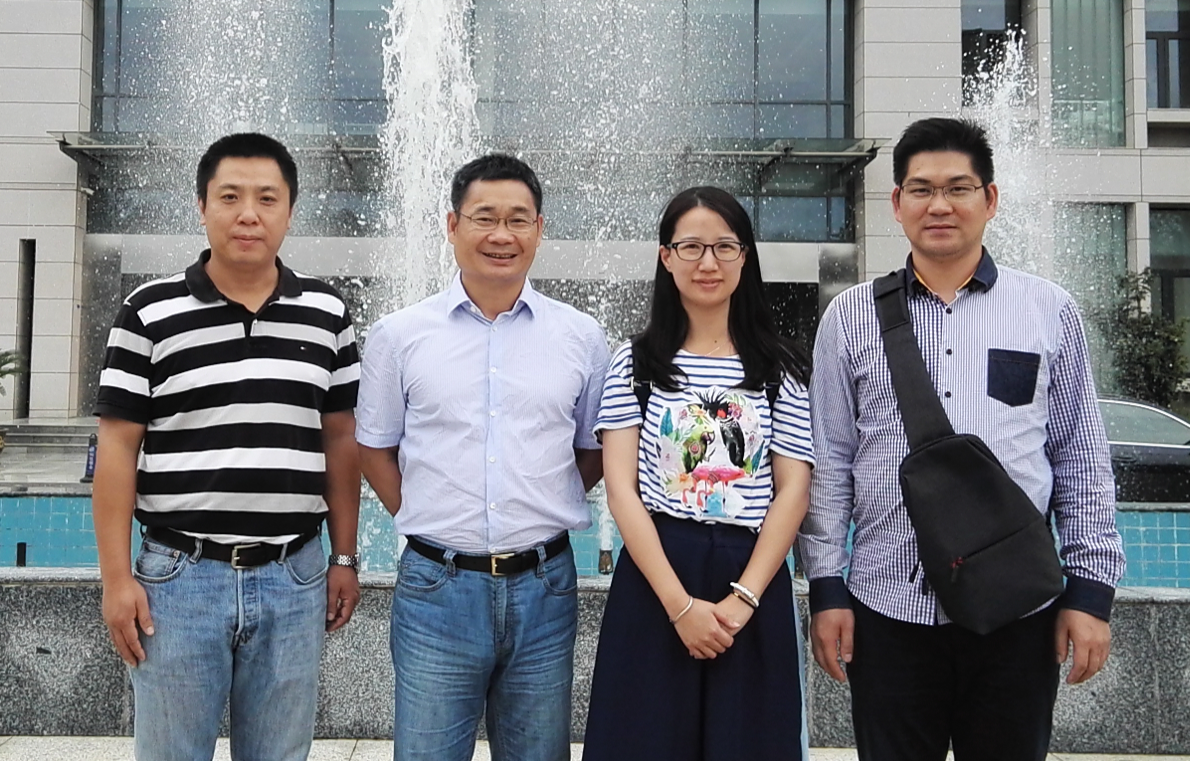
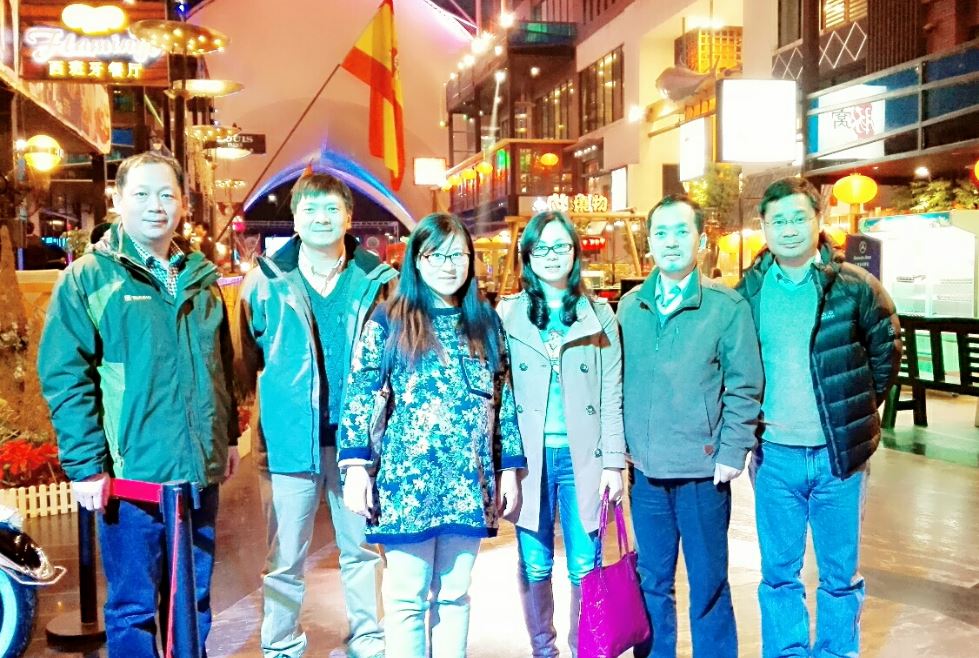 A pre-gathering of a few group members. From left to right: Dr Tiao Chongguo (田崇国), Prof Chen Yingjun(陈颖军), Prof Luo Chunling(罗春玲), Dr Cheng Hairong(成海容), Dr Li Jun (李军)and Zhang Gan (张干).
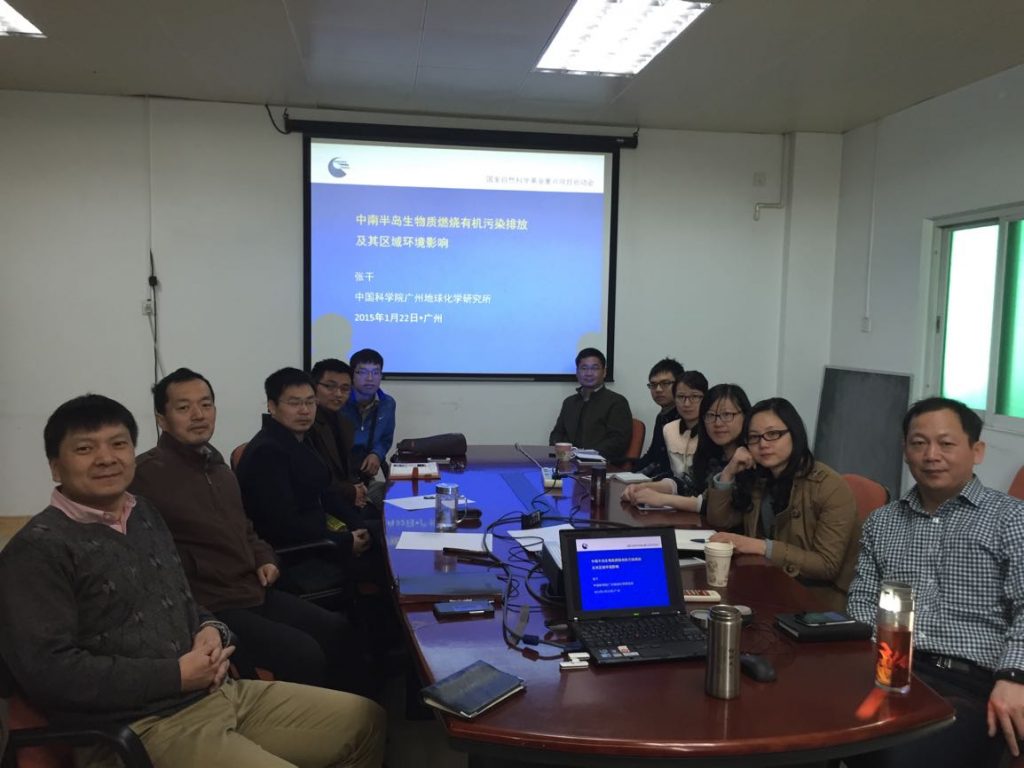 Meeting in room 407